Enterprise knowledge management has been a known problem for decades. The category has absorbed enormous investment in tools, programs, and processes. Confluence, SharePoint, Notion, Guru, and dozens of specialized platforms have been deployed at scale. Training programs have been mandated. Documentation culture initiatives have been launched with executive sponsorship.
And yet, the most common thing we hear from engineering leaders and operations teams is some version of the same problem: when a critical person is out, things stall. When a senior engineer leaves, critical context walks out the door. When a new hire starts, it takes them months to reach genuine productivity on anything beyond trivial tasks.
Something fundamental is not working. Here is our understanding of why.
The Documentation Debt Trap
The standard enterprise response to knowledge management problems is to mandate more documentation. Write runbooks. Update the wiki. Document your processes before you go on leave. This is not wrong exactly, but it mistakes the symptom for the cause.
Documentation mandates struggle with a basic incentive problem: the person who most needs to write documentation is the expert, and the expert is the person with the least spare time. Documentation is also uniquely bad at capturing the kind of knowledge that matters most. It captures what someone decided was worth writing down on the day they wrote it. It cannot capture the judgment calls, the known-but-unstated failure modes, the context about why a particular design decision was made, or the interpersonal knowledge about which colleague to call when the unusual thing happens. That tacit layer is precisely what makes an expert irreplaceable, and it is the hardest layer to transfer through documents.
The result is that documentation mandates tend to produce a lot of pages that satisfy compliance requirements but provide limited operational value. An engineer on call at 11pm facing an unfamiliar incident does not want a Confluence page that says "the payment reconciliation service processes end-of-day settlements." They need to know what to do when it fails, why it has historically failed, and who to wake up.
The Wiki Maintenance Problem
Even when documentation is written thoughtfully, it decays. Systems change, processes evolve, and the person who wrote the original runbook has moved on. Most enterprise wikis accumulate a growing stock of outdated pages alongside genuinely useful ones, with no reliable signal about which is which. Engineers learn quickly not to trust the wiki without verification, which erodes the return on whatever investment went into writing it in the first place.
Maintenance is the harder problem. Writing documentation is a one-time cost that most teams are willing to absorb when there is a specific reason (a new hire starting, a person going on leave). Keeping documentation current is a recurring cost that competes continuously with the work of actually running and building the systems being documented. In most teams, the recurring cost consistently loses, and the documentation slowly drifts out of sync with reality.
The deeper issue is structural: wikis require the team to pull knowledge into them through deliberate effort. They do not adapt automatically when the underlying processes and systems change. Knowledge management systems that require human effort to stay current will drift under sustained operational pressure, without exception.
The Training Program Gap
Cross-training programs are the other standard response to dependency risk. Pair senior engineers with more junior colleagues. Have multiple people attend key processes. Rotate on-call responsibilities to spread knowledge exposure.
These approaches are genuinely valuable, and we are not arguing against them. The limitation is scope. In a 50-person engineering team with 40 or more critical processes, getting meaningful coverage across all of them through deliberate cross-training programs would require a level of coordination that most teams cannot sustain alongside actual product development. And yet, the same 50-person team might have 15 to 30 critical processes covered by only one qualified person. That gap is too large to close through cross-training programs alone.
What cross-training programs also typically lack is visibility into where they are most needed. When a team manager decides who should shadow whom, they are working from their mental model of the team's knowledge coverage, not from a measured picture of actual dependency risk. That mental model is consistently wrong in predictable ways: it overestimates coverage in high-visibility areas and underestimates it in operational processes that run quietly and rarely require escalation until they break.
The Measurement Absence
Perhaps the most fundamental gap is that most teams have no measurement layer for knowledge health. They know they have knowledge concentration risk somewhere in the organization. They discover the specifics when someone goes on leave and a project stalls, or when an offboarding triggers a scramble. That reactive discovery is expensive in both time and stress.
What is missing is the equivalent of code coverage metrics or infrastructure monitoring: a quantitative picture of where the team's knowledge is concentrated, how that concentration changes over time, and which areas are approaching risk thresholds that warrant intervention.
Teams manage financial risk with dashboards. They manage infrastructure reliability with observability tooling. They manage software quality with automated test coverage metrics. Knowledge dependency risk, despite being equally consequential to team performance, has largely been managed through intuition and post-incident retrospectives.
Where the Category Is Actually Moving
The most promising shift we see is the move from push-based to pull-based knowledge capture. Rather than asking people to document their knowledge explicitly, this approach infers knowledge ownership from the work people are already doing: the code they commit and review, the incidents they resolve, the questions they answer, the processes they execute. That behavioral layer is richer, more current, and more honest than what people choose to write in a wiki.
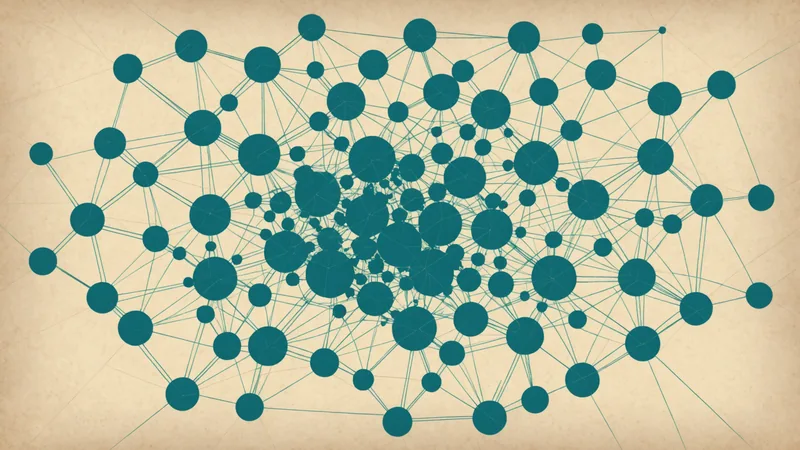
The knowledge graph as an organizational model is also gaining traction, for good reason. A wiki models knowledge as a collection of documents. A knowledge graph models knowledge as a network of relationships: who knows what, who depends on whom for which decisions, how knowledge flows between people and processes during normal operations. The graph representation makes dependency risk visible in a way that document inventories cannot.
We are not saying that wikis or training programs are bad investments. They are genuinely useful at what they do. The argument is narrower: they are insufficient as the sole response to knowledge dependency risk because they do not measure the underlying risk, and they cannot capture the tacit layer that matters most. A measurement and visualization layer, one that shows you where knowledge is concentrated and where coverage is thin, is what has been missing from the standard enterprise knowledge management stack.
That measurement layer is what we are building at Brekfuz. Not as a replacement for documentation or cross-training, but as the visibility foundation that lets you direct both of those investments where they will actually reduce operational risk.
See the knowledge graph in your own team
Brekfuz maps your organization's knowledge dependencies from the tools your team already uses. No manual surveys required.
Book a demo