Why leave season is different from regular capacity planning
Most operations teams have become reasonably good at capacity planning under normal conditions: understanding peak load periods, staffing appropriately, allocating sprint bandwidth against known commitments. Leave season introduces a constraint that standard capacity planning does not handle well, which is that the relevant scarcity is not headcount but knowledge coverage.
You can have 90 percent of your team present during a Q4 push and still have critical operations blocked if the 10 percent who are on leave happen to include the people who own the knowledge for the processes that surge in Q4. Headcount capacity and knowledge capacity are related but not the same thing. Teams that plan only for headcount consistently encounter leave season disruptions that look, in retrospect, entirely predictable and preventable.
The question that operations leads should be asking in October, ahead of a November-December leave peak, is not "how many people do we have available?" It is "which of our high-criticality processes have single-person knowledge dependencies, and are any of those people planning to be out during the period when those processes are most heavily relied on?" That is a knowledge coverage question, and answering it requires different information than a standard capacity model.
The predictable collision points
Leave season creates knowledge coverage risk through two distinct mechanisms that tend to compound each other.
The first is anticipated absence concentration. Extended leave periods like Q4 or summer generate clusters of simultaneous absences that are each individually planned and reasonable, but collectively expose multiple single-point dependencies at the same time. If five high-seniority team members each take two weeks off in roughly the same window, the overlap of their knowledge exposure areas is often larger than anticipated. The processes that seemed well-covered with four people present look different when two or three of those four are out simultaneously.
The second mechanism is timing collision with operational peaks. Many organizations have processes that peak in exactly the same windows where leave rates are highest. Q4 close processes, annual planning cycles, fiscal year-end reporting, and customer contract renewals all cluster around the same November-January window where leave takes significant team capacity. This is not a coincidence: both patterns are driven by the same calendar structure. The collision is reliably predictable. The specific processes affected depend on the organization's knowledge structure, which requires visibility to assess.
Coverage planning from the knowledge graph, not the org chart
The standard approach to leave season coverage planning is to identify who will be out and then look at that person's job description or team to assess what will be uncovered. This approach is a good starting point but routinely misses the full extent of the exposure because job descriptions describe formal responsibilities, not actual knowledge ownership.
A senior engineer whose job description says "backend development, Platform team" may also be the person who handles all significant questions about a legacy authentication service, who is routinely consulted on data pipeline decisions, and who is the only person who knows the correct manual override procedure for a specific class of billing error. None of that shows up in the job description. The first layer of the coverage gap assessment will not surface it.
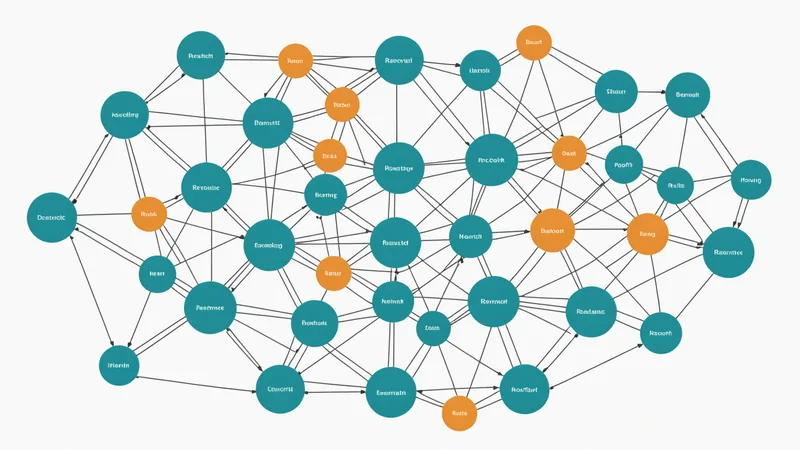
Coverage planning from the knowledge graph reverses this approach. Instead of starting with who is out and inferring what they do from their title, you start with the high-criticality processes and work backward: which processes have their primary or only recent active participant scheduled to be out during the coverage period? That analysis surfaces the real exposure regardless of what the departing person's job description says.
The additional step this enables is proactive coverage arrangement. Once you know that a specific process has a single active knowledge holder who will be out for two weeks during a period when that process will be heavily used, you can arrange for that knowledge to be shared before the leave, not scrambled for after. A four-week pre-leave window is enough time for a meaningful knowledge transfer on most process types. A 24-hour window after the project has already stalled is not.
What a pre-leave knowledge brief looks like
For each high-risk dependency identified in the coverage analysis, the goal before the leave period starts is to produce a usable knowledge brief: not a full documentation exercise, but enough structured context to allow someone else to handle the routine execution of the process and recognize the situations that require waiting for the primary holder to return rather than improvising.
A useful pre-leave knowledge brief has three components. The first is a clear description of the process steps with particular attention to the non-obvious parts: where does this process deviate from what the documentation says, and what are the decision points that require judgment rather than just executing a step? The second is a set of worked examples: here are three representative instances of this process, here is how I handled them, here are the decisions I made and why. The third is an explicit list of escalation conditions: here are the situations where the right action is to wait for my return or escalate to the specified backup person rather than proceeding independently.
This is a different scope than a full knowledge transfer, which takes weeks. A pre-leave brief is scoped to what the temporary coverage person needs to maintain operations during the absence, not to fully replicate the knowledge holder's capability. The difference in required effort is significant, and most teams can realistically execute a brief-quality transfer for their highest-risk dependencies within two to three weeks if they know in advance where to focus.
The manager coordination gap
One reason leave season knowledge coverage planning fails consistently is a coordination problem. Individual team members plan their leave without necessarily knowing which of their knowledge areas overlap with another person who will also be out at the same time. Managers approve leave individually without a view of the aggregate knowledge exposure. Nobody has a clear view of the combined exposure until the period starts.
This is not a failure of intent. It is a structural problem that comes from planning individual leaves without visibility into the team's collective knowledge structure. An individual team member approving a leave request cannot be expected to know which of the approving engineer's knowledge domains are also single-point dependencies for other team members who have also submitted leave requests for the same period.
The useful intervention is not to add another approval layer or to require team members to document their knowledge before being allowed to take leave. Those approaches add friction without changing the underlying information problem. The useful intervention is to run a dependency overlap analysis before leave requests are finalized, so that managers know in advance which simultaneous absences create compounded knowledge risk and can make informed decisions about scheduling or coverage arrangements.
Not every leave creates a coverage risk
We want to be clear about the scope of what this analysis is for. The majority of team members going on planned leave will not create significant operational risk, because the majority of what most people do is either well-covered by documentation, has multiple people with adequate knowledge, or is not time-critical enough to require continuous coverage.
The analysis described in this post is specifically about identifying the minority of cases where a leave creates a genuine coverage gap on a high-criticality process. That minority is smaller than a worst-case estimate and larger than an optimistic one. In teams with good knowledge management practices, it might be five or six processes for a 50-person team heading into a two-week peak leave window. In teams with accumulated single-person dependencies and less deliberate knowledge-sharing practice, it might be significantly more.
The appropriate response to identifying those gaps is targeted pre-leave knowledge work on the high-risk subset. It is not a general documentation mandate, not a prohibition on extended leave, and not a requirement to brief coverage for every process every person owns. Scoped to the actual risk, the pre-work required to maintain continuity through leave season is usually smaller than teams expect when they first think about the problem systematically, precisely because most processes are not single-person dependencies and most absences do not create critical gaps. The value of the knowledge graph in this context is making that distinction visible and specific, rather than either ignoring the problem or treating every leave as a risk that requires comprehensive mitigation.
See the knowledge graph in your own team
Brekfuz maps your organization's knowledge dependencies from the tools your team already uses. No manual surveys required.
Book a demo